

Why Kids Need a Dental Home
By Midwest Family Dental Care Editorial Team · Updated 2026-07-13
Children benefit from a dental home because consistent, relationship-based care catches early childhood dental caries before it progresses. Dental caries affects children across all socioeconomic groups, making early intervention critical. Midwest Family Dental Care provides “How to Prepare Your Kids for Their First Dental Visit” — Parents + pediatric de that establish this trusted foundation, supporting healthy teeth and gums throughout a child’s development.
Key Takeaways
- Children with a dental home by age 1 receive earlier cavity prevention and personalized oral care plans.
- Early childhood dental caries affects low-income families at epidemic proportions, making early dental visits critical.
- A dental home at Midwest Family Dental Care in Mishawaka tracks your child’s dental development across every growth stage.
- Kids with consistent pediatric dental care face significantly lower risks of untreated tooth decay and related health issues.
Why Does Your Child Need a Dental Home?
Pediatric dental care built around a consistent, long-term relationship gives children a measurable advantage in lifelong oral health. Without a dedicated dental home, families lose continuity — and children who lack consistent dental oversight face higher risks of undetected decay, untreated developmental concerns, and anxiety that compounds with every unfamiliar visit.
The American Academy of Pediatric Dentistry defines a dental home as a long-term relationship in which all aspects of a child’s oral health are delivered in a safe, caring, and personalized environment. A dental home is not simply a backup location for emergencies. It is a trusted practice that maintains a child’s complete dental history. Develops a genuine understanding of each family’s specific needs.
What Makes a Dental Home Different From a One-Time Visit?
A one-time or emergency-only visit provides no continuity. A true dental home tracks developmental milestones, monitors bite alignment. Flags early signs of decay before they escalate into costly restorative treatment. Families who rely solely on urgent visits miss the preventive foundation that protects a child’s smile for decades.
What Should Families Look for in a Dental Home for Kids?
The strongest dental care for kids comes from a full-service practice that handles every stage of treatment under one roof. Eliminating the disruption of referrals to multiple offices. Key qualities to prioritize include:
- Comprehensive in-house services — general, preventive, and restorative care without outside referrals
- Consistent provider relationships — the same clinical team across every visit
- Personalized treatment planning — care tailored to each child’s history and family circumstances
Midwest Family Dental Care provides comprehensive pediatric dentistry as part of its full-service, in-house care across Michigan. Indiana locations, giving families a single, reliable dental home from infancy through adolescence.
When Should Kids Start Seeing a Dentist?
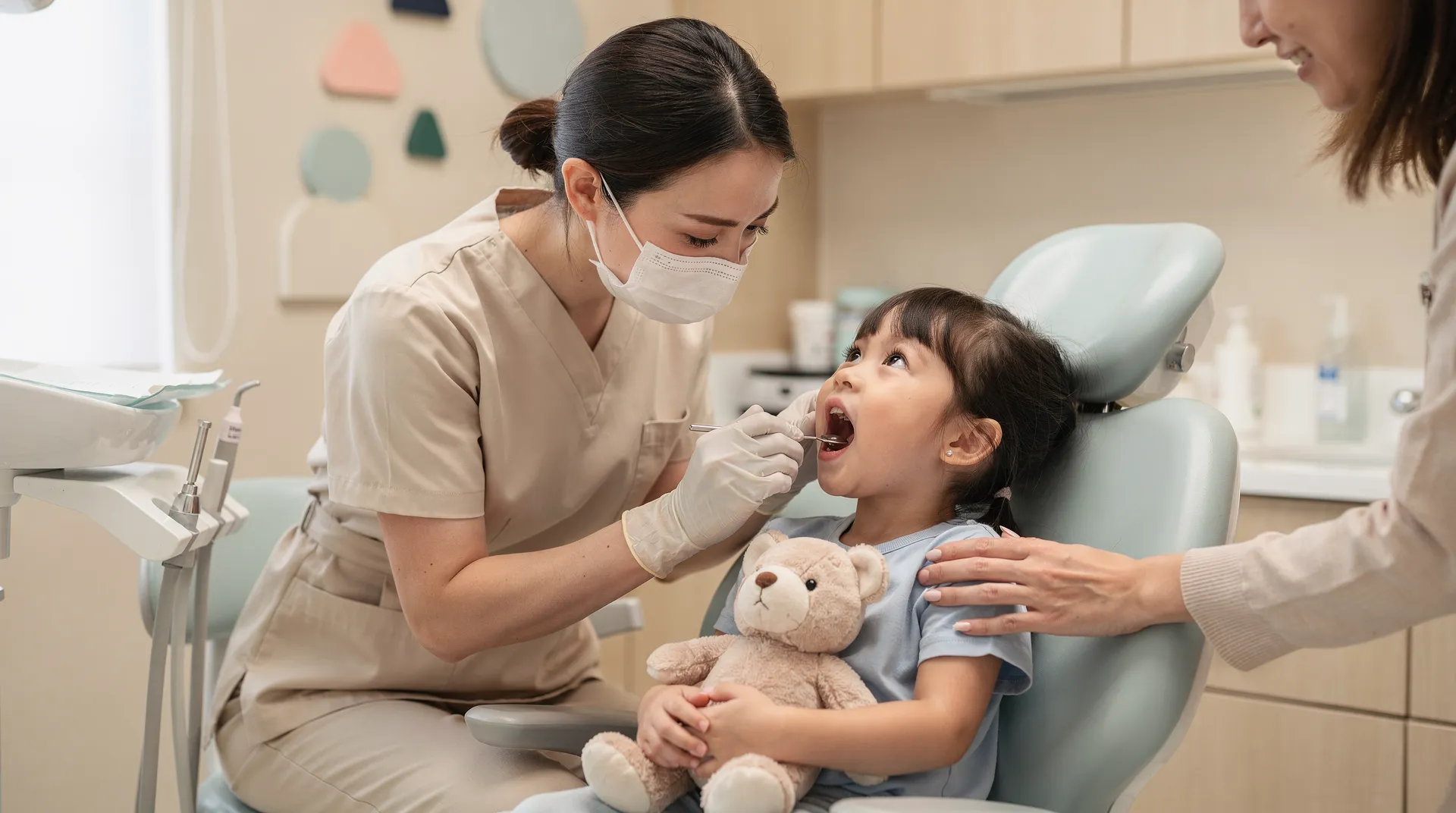
Pediatric dental care should begin no later than a child’s first birthday — or within six months of the first tooth erupting. Delaying dental care for kids beyond infancy means missing the critical window when oral bacteria first colonize the mouth, a process that begins between 6 and 30 months of age as primary teeth emerge.
That timing matters more than most parents realize. Once primary teeth erupt, the mouth becomes susceptible to colonization by cavity-causing bacteria. Children who lack an established dental home during this window miss early preventive interventions that protect teeth and gums throughout life.
Why Does the First Tooth Mark Such an Important Milestone?
Primary teeth begin erupting as early as 6 months of age. The colonization of a child’s dental flora starts at that same moment. Establishing a dental relationship at this stage allows providers to monitor bacterial risk, guide parents on feeding habits. Intercept early decay before it progresses.
What Happens If Families Wait Too Long to Start Dental Visits?
Children without an established dental home lose the continuity of care that tracks oral development across every growth stage. Research confirms that choosing a dental home during infancy sets children up for healthy teeth and gums throughout their lives. A benefit that cannot be fully recovered by starting dental visits later.
Midwest Family Dental Care provides Emergency Dental Care in Michigan: Fast Help When You Need It Most at multiple locations across Michigan and Indiana, including Grand Rapids, Kalamazoo, Portage, and Kokomo. Families in these communities have convenient access to comprehensive, in-house pediatric services. No referrals, no separate offices, no gaps in care.

How Does Early Care Prevent Childhood Tooth Decay?
Pediatric dental care stops tooth decay before it starts by targeting the bacterial transmission window — the narrow period between birth and a child’s first tooth eruption. Without early intervention, families miss the single most effective opportunity to reduce a child’s lifelong cavity risk.
Early childhood caries (the clinical term for tooth decay in young children) affects children across all racial and socioeconomic groups. In low-income families, the condition reaches epidemic proportions, making early prevention especially critical for communities with limited access to dental resources.
How Do Cavity-Causing Bacteria Reach an Infant’s Mouth?
Infants are not born with cavity-causing bacteria in their mouths. The most common source of bacterial transmission is the mother or another close caregiver. Through shared utensils, kissing, or similar intimate contact. This transmission typically occurs during the primary tooth eruption window, roughly between six and thirty months of age.
Can a Parent’s Dental Health Protect Their Child?
A caregiver’s oral health directly shapes a child’s cavity risk. Reducing the level of harmful bacteria in a mother’s dental flora at the time of colonization significantly lowers a child’s predisposition to caries. This means dental care for kids effectively begins with the parent’s own preventive treatment.
Key steps families can take before and after a child’s first tooth appears:
- Schedule a caregiver dental cleaning to reduce cariogenic (cavity-causing) bacteria
- Avoid sharing utensils, cups, or toothbrushes with infants
- Establish a dental home for the child at or before the first tooth eruption
Midwest Family Dental Care supports families at every stage through personalized treatment plans. Advanced technology, ensuring both caregivers and children receive the preventive foundation their oral health requires.
What Services Does a Pediatric Dental Home Offer?
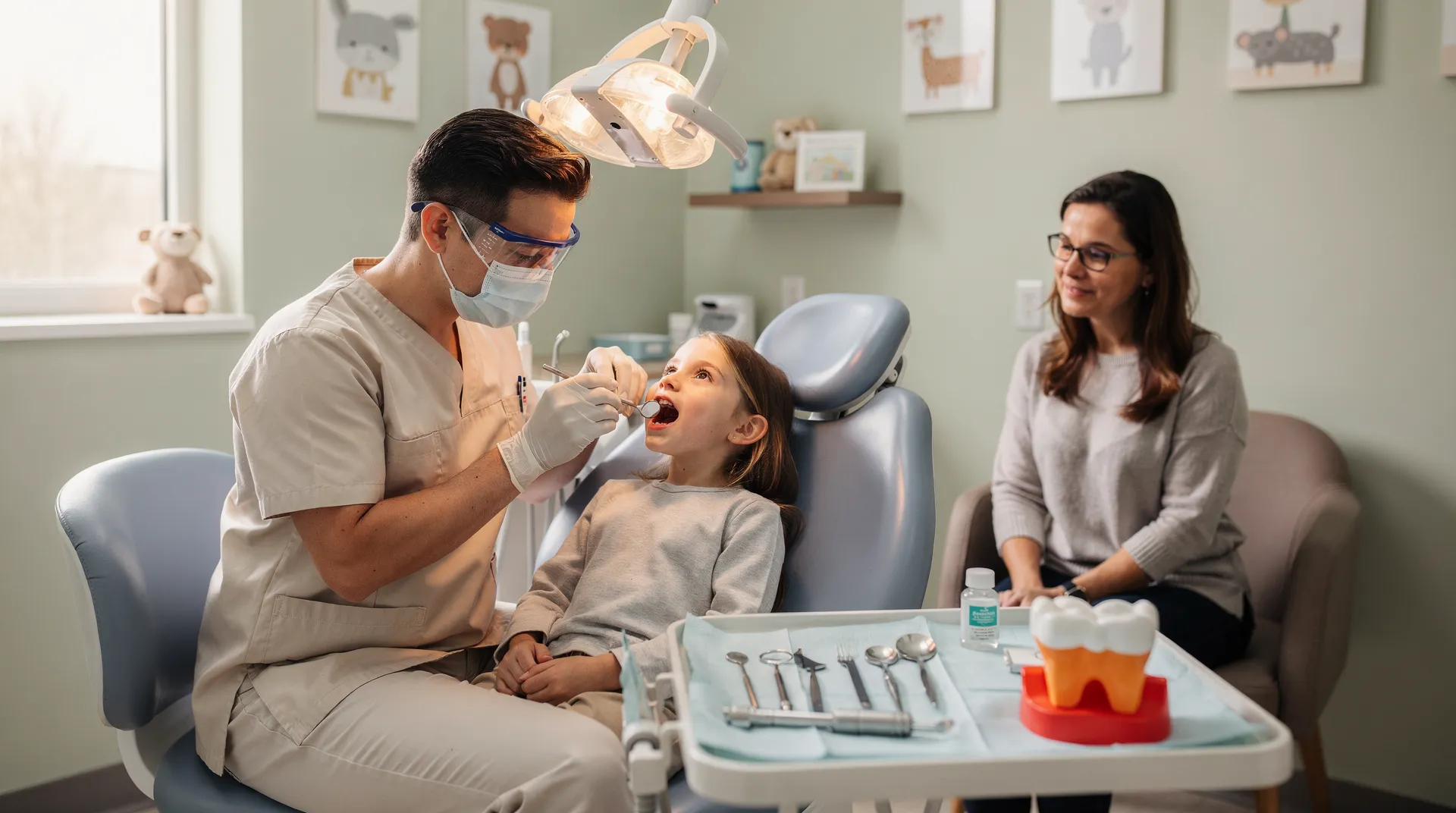
Pediatric dental care delivered through a dental home spans preventive services, patient education, and ongoing clinical support from infancy through adolescence. Families who skip establishing a dental home early risk losing continuity of care — gaps that allow undetected decay, misalignment, and gum disease to progress silently between visits.
Midwest Family Dental Care provides a full range of services in-house. Families never need to travel from office to office for different types of care. Locations serving Southwest Michigan communities — including Kalamazoo and surrounding areas. Deliver Complete Dental Care for Every Age that puts patients first. Portage-area families access that same comprehensive, affordable care all under one roof.
What types of preventive services does a pediatric dental home provide?
A pediatric dental home partners with families to deliver preventive care, education, and support across every stage of childhood development. Core preventive services typically include:
- Routine cleanings and exams to catch early decay before it advances
- Fluoride treatments to strengthen developing enamel
- Dental sealants applied to back teeth to block cavity-causing bacteria
- Oral hygiene education tailored to each child’s age and developmental stage
- Bite and alignment monitoring to identify orthodontic concerns early
Does a pediatric dental home handle emergencies and restorative needs?
A full-service pediatric dental home addresses more than routine prevention. Restorative and emergency treatment are handled in the same familiar office. Midwest Family Dental Care performs general, cosmetic, restorative, and emergency services in-house, eliminating the disruption of referrals to unfamiliar providers. Keeping all care under one roof preserves the trust children build with their dental team over time. Directly reduces dental anxiety at future visits.
How Do You Choose the Right Dental Home?
Choosing the right dental home means finding a consistent, patient-centered practice that serves every family member. From toddlers to grandparents — under one roof. Families who delay establishing a dental home risk fragmented care, missed early diagnoses, and higher long-term treatment costs.
The dental care for kids framework draws directly from the medical home model, a concept the pediatrics community developed to improve families’ care utilization. A true dental home applies that same logic to oral health: one trusted practice that knows a patient’s full history. Grows with the family over time.
What Should Families Look for in a Dental Home?
The strongest dental homes combine comprehensive services with practical accessibility. Midwest Family Dental Care serves communities across Michigan and Indiana — including areas around Grand Rapids, Kalamazoo, Portage. Kokomo — offering pediatric dental care alongside general, cosmetic, restorative, and emergency dentistry at each location.
Key features worth evaluating:
- Same-day emergency availability — dental crises don’t follow business hours
- Family scheduling — coordinating multiple appointments in one visit saves time
- Flexible financing options — cost barriers cause families to postpone necessary care
Does a Dental Home Really Matter for Children?
Establishing a dental home early shapes a child’s lifelong relationship with oral health. Dental care for kids delivered through a consistent practice allows clinicians to track development, catch issues before they escalate. Build the trust that reduces dental anxiety over time. Families without a dedicated dental home are more likely to seek care reactively rather than preventively. A pattern that increases both risk and expense.
Why Establishing a Dental Home Matters for Kids
When should my child first visit the dentist?
Pediatric dental care starts no later than a child’s first birthday, or within six months of the first tooth erupting. Oral bacteria colonize the mouth during the critical window between 6 and 30 months.
What makes a dental home different from a one-time visit?
A dental home tracks developmental milestones, monitors bite alignment, and flags early decay before it escalates into costly restorative treatment. A one-time visit provides no continuity or preventive foundation.
Where does Midwest Family Dental Care provide pediatric dental services?
Midwest Family Dental Care operates across Michigan. Indiana locations, including Mishawaka, IN, offering comprehensive in-house pediatric dentistry from infancy through adolescence without outside referrals.